
Best First Cars For New Drivers
Updated April 25, 2026
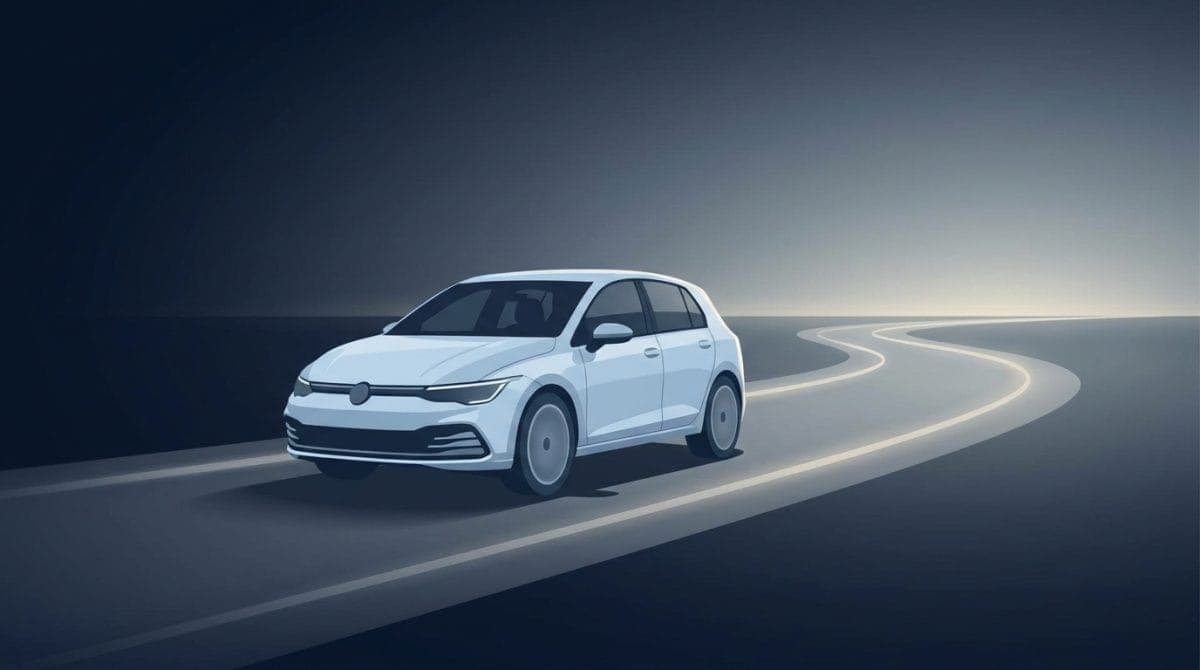
Best First Cars for New Drivers: A Used Car Shopping Guide
Choosing a first car is one of the more consequential purchases a new driver will make. The right vehicle can help build confidence behind the wheel, keep operating costs predictable, and provide a reasonable safety margin during the higher-risk early years of driving. This guide walks through what typically matters most when shopping for a used first car in the United States, which models generally stand out, and how to use federal resources from the National Highway Traffic Safety Administration (NHTSA) and the U.S. Environmental Protection Agency (EPA) to make an informed decision.
Why the First Car Matters
New drivers, and particularly teen drivers, are statistically overrepresented in crashes. According to NHTSA data, drivers ages 16 to 19 have a higher crash rate per mile driven than most other age groups. A first car that prioritizes crashworthiness, predictable handling, and modern driver-assistance features can help offset some of that elevated exposure. At the same time, affordability matters: insurance, fuel, maintenance, and repairs may strain a new driver’s budget if the vehicle is mismatched to their needs.
The general goal is to find a balance: a vehicle that is safe enough to meaningfully protect the driver, simple enough to be inexpensive to own, and common enough that parts and service are widely available.
What to Prioritize in a First Car
Safety Ratings and Features
NHTSA’s New Car Assessment Program (NCAP) produces 5-Star Safety Ratings based on frontal crash, side crash, and rollover testing. When shopping used, look up the specific model year on NHTSA.gov, since ratings can change across redesigns. Vehicles with four or five stars overall are generally preferable for new drivers.
Beyond crash ratings, consider whether the vehicle includes:
- Electronic stability control (ESC), federally required on all passenger vehicles model year 2012 and later
- Side-curtain airbags
- Anti-lock braking systems (ABS)
- A rearview camera, federally required on vehicles built on or after May 1, 2018
- Forward collision warning and automatic emergency braking (increasingly common on model year 2017 and newer vehicles)
- Blind spot monitoring and lane departure warning
These technologies may help reduce the frequency or severity of common new-driver mistakes, though no feature eliminates risk entirely.
Size and Power
A common recommendation is to avoid both the smallest subcompacts and the most powerful performance models for a first car. Midsize sedans and compact SUVs often provide a useful middle ground: enough mass for crash energy management, manageable dimensions for parking and maneuvering, and modest engines that generally discourage aggressive driving. High-horsepower vehicles typically carry higher insurance premiums as well.
Reliability and Cost of Ownership
Used cars with strong reliability histories generally cost less to maintain over time. When evaluating a specific vehicle, check NHTSA’s database for recalls and consumer complaints at nhtsa.gov/recalls. Open recalls can typically be addressed at a franchise dealer at no charge, but a pattern of complaints about a specific component may indicate a recurring problem.
Fuel Economy
The EPA publishes official fuel economy estimates at fueleconomy.gov for virtually every vehicle sold in the U.S. since 1984. A difference of even 5 MPG can meaningfully change annual fuel costs for a new driver who commutes daily. Most of the vehicles recommended below achieve at least 30 MPG combined in their more efficient trims.
Recommended Used Models for New Drivers
The following vehicles are frequently recommended because they generally combine solid crash test performance, widespread availability, reasonable insurance costs, and strong long-term reliability. Model years listed reflect generations that are typically accessible on the used market as of the mid-2020s.
Toyota Corolla (2014 and newer)
The Corolla is a long-standing favorite for first-time drivers. The 2014–2019 generation received four-star overall NCAP ratings, and the redesigned 2020-and-newer model improved to five stars in many configurations. Toyota Safety Sense, which bundles forward collision warning, lane departure alert, and automatic high beams, became standard on most Corolla trims starting in 2017. EPA combined fuel economy is typically 30–33 MPG.
Honda Civic (2016 and newer)
The tenth-generation Civic (2016–2021) and eleventh-generation (2022+) are widely regarded as well-rounded compact sedans. Honda Sensing driver-assistance features became more widely available across trims beginning in 2016 and were made standard across all Civics for the 2019 model year. EPA combined fuel economy typically ranges from 32 to 36 MPG depending on trim.
Mazda3 (2014 and newer)
The Mazda3 tends to offer sharper handling than most competitors while still delivering good fuel economy (typically around 30 MPG combined). NCAP ratings are generally strong, and used examples are often well-equipped. Some new drivers appreciate the more engaging steering feel, though parents may prefer less sporty alternatives.
Toyota Camry (2015 and newer)
A step up in size from the Corolla, the Camry offers more crash energy management due to its larger footprint while remaining very reliable. The 2018 redesign brought standard Toyota Safety Sense P, which includes automatic emergency braking. EPA combined fuel economy is typically 28–34 MPG for four-cylinder models.
Honda Accord (2013 and newer)
Like the Camry, the Accord is a midsize sedan with a long track record of strong NCAP results and robust resale. Honda Sensing became increasingly standard from 2018 onward. Four-cylinder models typically return around 30–33 MPG combined per EPA estimates.
Subaru Impreza or Crosstrek (2017 and newer)
Standard all-wheel drive may be valuable for new drivers in snowy or wet climates. EyeSight driver-assistance technology, which includes pre-collision braking and lane keep assist, has been available on many Subaru models since the mid-2010s and became standard on most CVT-equipped vehicles by 2019. Fuel economy is typically slightly lower than front-wheel-drive competitors, around 28–30 MPG combined for the Impreza and 27–29 MPG combined for the Crosstrek.
Hyundai Elantra or Kia Forte (2017 and newer)
These corporate cousins generally offer strong value on the used market, competitive NCAP ratings, and long original factory warranties (10 years/100,000 miles powertrain) that may still be partially transferable. Combined EPA fuel economy typically lands between 31 and 35 MPG.
Honda CR-V or Toyota RAV4 (2015 and newer)
For new drivers who need a small SUV, these two dominate the segment. Both offer good visibility, comfortable seating positions, and strong NCAP scores. The RAV4 redesign for 2019 made Toyota Safety Sense 2.0 standard. The CR-V made Honda Sensing standard on most trims starting in 2017. Combined fuel economy is typically 28–30 MPG.
Ford Escape or Chevrolet Equinox (2018 and newer)
These domestic compact SUVs tend to be priced slightly lower than their Japanese counterparts on the used market. Safety ratings are generally competitive, though it is worth checking NHTSA recall records for specific model years, as both nameplates have had recalls affecting certain builds.
Vehicle Types That May Be Less Ideal for New Drivers
Large Pickup Trucks and Full-Size SUVs
While mass generally helps in crashes, very large vehicles typically have longer stopping distances, larger blind spots, and higher rollover propensity than passenger cars. They are also usually more expensive to fuel and insure. For a new driver still building spatial awareness, a smaller vehicle is often easier to place on the road.
Sports Cars and High-Horsepower Vehicles
Performance-oriented vehicles typically come with higher insurance premiums and may tempt new drivers to exceed their skill level. Insurance surcharges on sports cars can be substantial for drivers under 25.
Very Old or High-Mileage Vehicles
Vehicles more than about 15 years old may lack electronic stability control, side airbags, or other features now considered baseline safety equipment. Cars built before model year 2012 are not required to have ESC, which is among the most effective crash-avoidance technologies ever studied by NHTSA.
Salvage or Rebuilt-Title Vehicles
A rebuilt-title vehicle may cost less up front but can have compromised crash structure, harder-to-place insurance, and lower resale value. For a first car, a clean title is generally preferable.
How to Use NHTSA and EPA Tools Before You Buy
Check for Open Recalls
Enter the vehicle identification number (VIN) at nhtsa.gov/recalls to see whether any safety recalls remain unaddressed. Open recalls can typically be repaired free of charge at a manufacturer-franchised dealer. If a seller refuses to complete recall work before sale, that may be a reason to negotiate or walk away.
Review Safety Ratings
NHTSA’s 5-Star Safety Ratings are searchable by year, make, and model at nhtsa.gov/ratings. Pay attention to both the overall rating and the individual frontal, side, and rollover scores. Ratings methodology was updated in 2011, so comparisons across that boundary may not be apples-to-apples.
Research Consumer Complaints and Investigations
NHTSA’s complaint database lets shoppers search for patterns of reported issues on a given model year. A small number of complaints is normal; large clusters around a specific system (transmission, brakes, electrical) may warrant additional inspection by an independent mechanic.
Estimate Fuel Costs
The EPA’s fueleconomy.gov site provides official city, highway, and combined MPG estimates, along with annual fuel cost estimates based on current national average prices. The “My MPG” tool also shows real-world results reported by owners, which can be useful when manufacturer estimates and actual results diverge.
Budgeting for Total Cost of Ownership
Sticker price is only part of the equation. A realistic monthly budget for a new driver generally includes:
| Category | Typical Monthly Range | Notes |
|---|---|---|
| Loan payment | $0–$400 | Varies with down payment, term, and rate |
| Insurance | $100–$400 | Higher for drivers under 25 |
| Fuel | $100–$250 | Depends on mileage and EPA rating |
| Maintenance | $40–$100 | Oil, tires, brakes, fluids |
| Repairs/contingency | $25–$75 | Higher on older vehicles |
| Registration/fees | $10–$40 | Varies by state |
Getting insurance quotes before finalizing a purchase is generally a good idea. Premiums can vary significantly by vehicle, ZIP code, and driver profile.
Pre-Purchase Inspection Checklist
Regardless of which vehicle a new driver chooses, a pre-purchase inspection by an independent mechanic (typically $100–$200) is usually money well spent on a used car. A thorough inspection generally includes:
- Engine and transmission condition, including fluid samples
- Brake pad and rotor measurements
- Tire age and tread depth
- Suspension and steering components
- Evidence of prior collision repair or flood damage
- Functionality of all airbag, ABS, and stability control warning lights
- Battery age and charging system health
- Verification that open recalls have been completed
A clean vehicle history report is helpful but does not replace a physical inspection.
Final Thoughts
The “best” first car is generally the one that matches the driver’s environment, budget, and skill level while providing a reasonable safety margin. For most U.S. used car shoppers, that typically means a three- to seven-year-old compact or midsize sedan or small SUV from a manufacturer with a strong reliability track record, equipped with electronic stability control, side airbags, and at least one advanced driver-assistance feature such as automatic emergency braking. Cross-referencing candidate vehicles with NHTSA recall data, NCAP ratings, and EPA fuel economy estimates can help new drivers and their families make a more informed decision.
No vehicle choice eliminates the elevated crash risk that comes with driver inexperience, but a thoughtful selection, combined with supervised practice, graduated licensing compliance, and safe driving habits, may meaningfully improve the odds of a good outcome during the critical first years behind the wheel.
About this guide
Researched with public federal data, cited inline above. Reviewed by the CarCabin editorial team. Updated when underlying data or methodology changes.
Written with AI assistance, reviewed by an editor. Reviewed by the CarCabin editorial team. Source citations and stats are linked inline above. We update guides when underlying federal data or methodology changes.
Disclaimer. Educational content. CarCabin is not a dealer, mechanic, or financial advisor. Always have a qualified mechanic inspect any vehicle before purchase, and verify recall status by VIN at nhtsa.gov/recalls.