
Pre-Purchase Inspection Guide
Updated April 25, 2026
The Complete Pre-Purchase Inspection Guide for Used Car Shoppers
Buying a used car in the United States can be one of the smartest financial decisions a household makes — or one of the most expensive mistakes. The difference often comes down to what happens in the hour or two before money changes hands. A thorough pre-purchase inspection (PPI) helps shoppers uncover hidden mechanical problems, verify a vehicle’s safety history, and confirm that the car matches its advertised condition. This guide walks through the full process, combining hands-on checks with federal data sources such as the National Highway Traffic Safety Administration (NHTSA) recall and complaint databases and the Environmental Protection Agency (EPA) fuel economy records.
Why a Pre-Purchase Inspection Matters
Used vehicles typically carry some degree of wear, prior-owner history, and deferred maintenance. While a clean appearance and a smooth test drive may feel reassuring, many costly issues — such as internal engine wear, transmission control problems, frame damage from a prior collision, or outstanding safety recalls — are not visible without a structured inspection. A PPI generally combines three layers of review:
- A documentation and history review
- A visual and mechanical inspection (ideally by an independent technician)
- A road test under varied conditions
Shoppers who invest roughly $100 to $250 in a professional inspection may avoid thousands in post-purchase repairs. No inspection is perfect, but a disciplined process generally lowers the probability of an unpleasant surprise.
Step 1: Start With the VIN and Federal Databases
Before visiting the seller, note the 17-character Vehicle Identification Number (VIN) from the listing and run it through public federal resources. These are free and authoritative.
NHTSA Recall Lookup
Use the NHTSA VIN Recall Lookup tool at nhtsa.gov/recalls to check whether the specific vehicle has any open (unrepaired) safety recalls. Open recalls are typically repaired free of charge by a franchised dealer of the vehicle’s brand, but unrepaired items such as faulty airbag inflators, fuel system defects, or braking issues may pose meaningful safety concerns. Shoppers generally want to confirm that all recall remedies have been completed before finalizing a purchase.
NHTSA Complaints and Investigations
NHTSA also publishes consumer complaint data and ongoing defect investigations. Reviewing complaint volumes for the specific year, make, and model can reveal patterns — for example, transmission shudder, excessive oil consumption, or electronic parking brake failures — that may not appear in a brief test drive.
NHTSA New Car Assessment Program (NCAP) Ratings
Although NCAP covers crashworthiness at the time of sale when new, its star ratings remain relevant when evaluating an older used vehicle. A model with 5-star overall ratings and standard electronic stability control typically offers more crash protection than an older, lower-rated equivalent. Ratings are searchable at nhtsa.gov/ratings.
EPA Fuel Economy Data
The EPA’s fueleconomy.gov database lists official city, highway, and combined miles-per-gallon (MPG) figures for virtually every U.S.-market vehicle since 1984. Comparing the EPA-rated fuel economy to what the seller claims — and to what the vehicle actually delivers on a test drive — can highlight mechanical problems such as failing oxygen sensors, dragging brakes, or ignition issues that typically reduce real-world MPG.
Title and History Reports
Commercial history reports (such as those from services that draw on the National Motor Vehicle Title Information System, NMVTIS) can flag salvage, flood, or branded titles, odometer discrepancies, and reported accidents. These reports are not exhaustive — minor or unreported collisions may not appear — but they are a useful screening layer.
Step 2: Exterior Visual Inspection
Inspect the vehicle in daylight, on a dry surface, and when the body is clean. Rain, shade, or dealer lighting can mask paint and body issues.
Panels, Gaps, and Paint
- Walk around the car and examine panel gaps. Uneven spacing between hood, fenders, doors, and trunk may indicate prior collision repair.
- Look along each panel at a low angle. Ripples, orange-peel texture mismatches, or overspray on trim and weatherstripping typically suggest repainting.
- Use a magnet (on steel panels) or a paint-depth gauge to detect areas of filler.
Glass, Lights, and Trim
- Check the windshield for cracks, chips, and pitting. Replacement typically costs several hundred dollars, and cars with advanced driver-assistance systems (ADAS) generally require camera recalibration.
- Confirm all exterior lights function, including reverse, license plate, and turn signals.
- Inspect bumpers and rocker panels for scrapes, cracks, and loose clips.
Tires and Wheels
- Read the DOT date code on each tire sidewall; tires older than roughly six years may warrant replacement regardless of tread depth.
- Uneven tread wear can indicate alignment problems, suspension damage, or neglected rotations.
- Check that all four tires are the same brand, size, and load rating; mismatches can affect handling and, on all-wheel-drive vehicles, driveline durability.
Underbody and Frame
- Look under the vehicle for rust, particularly on subframes, control arms, brake lines, and fuel lines.
- Fresh undercoating on an older car may be cosmetic — but it may also hide corrosion.
- Check for fluid drips on the ground beneath the engine, transmission, differentials, and suspension.
Step 3: Interior Inspection
Upholstery and Controls
- Sit in each seat and check for sagging cushions, torn bolsters, and non-functional power adjusters.
- Operate every switch: windows, locks, mirrors, seat heaters, climate fan at all speeds, rear defroster, sunroof, and infotainment.
- Test both the A/C (cold, quickly) and the heat (hot, steadily). HVAC repairs are generally expensive.
Odors and Moisture
A musty smell, damp carpet, or fogged headlight lenses may indicate water intrusion or a past flood event. Lift floor mats and, if possible, the spare tire cover to check for rust, silt, or water lines.
Warning Lights
Turn the ignition to the “on” position without starting. The dashboard should illuminate warning lights (airbag, ABS, check engine, tire pressure) and then extinguish them after starting. A missing bulb — for example, no airbag light at all — can be a red flag that someone has disabled a warning to hide a problem.
Safety Equipment
- Confirm that all seat belts extend, retract, and latch.
- Check airbag covers for tampering and the airbag warning label.
- If the vehicle has ADAS features (automatic emergency braking, lane-keeping assist, blind-spot monitoring), verify that the corresponding indicators work and that no related fault messages appear.
Step 4: Under the Hood
Open the hood with the engine cold. A cold start later in the inspection is one of the most revealing moments of the entire process.
Fluids
| Fluid | What to Look For |
|---|---|
| Engine oil | Amber to dark brown; no milky film (which may indicate coolant intrusion) and no gritty particles. |
| Coolant | Clean color appropriate to the vehicle (green, orange, pink, blue); no oil sheen or rust. |
| Transmission fluid (if a dipstick is present) | Typically red or amber; a burnt smell may indicate internal wear. |
| Brake fluid | Clear to light amber; dark fluid suggests overdue service. |
| Power steering (if applicable) | Clean, at proper level, no foaming. |
Belts, Hoses, and Battery
- Inspect belts for cracks or glazing.
- Squeeze coolant hoses; they should feel firm, not mushy or rock-hard.
- Check battery terminals for corrosion and note the battery’s date code; batteries older than about five years are typically near end of life.
Leaks and Repairs
Look for oil seepage around valve covers, the oil pan, and timing covers. Evidence of recent repair — new gaskets, fresh RTV, or clean parts in an otherwise dusty bay — can be informative. Ask the seller to explain any recent work and request receipts.
Step 5: The Cold Start and Road Test
Cold Start
A vehicle that has been running before you arrive can hide problems such as hard starts, misfires, lifter tick, and blue or white exhaust smoke. When possible, arrange to start the car yourself when the engine is fully cold. Listen for:
- Grinding or prolonged cranking
- Valve train noise that does not quiet within 30 seconds
- Exhaust smoke: blue (oil), white that persists (coolant), or black (overly rich fuel mixture)
Test Drive
Plan a route that includes city streets, a highway on-ramp, and a parking lot. During the drive:
- Test braking from 35–45 mph in a safe area. The vehicle should stop straight without pulsation or pulling.
- Accelerate firmly on an on-ramp. Automatic transmissions should shift smoothly; manual transmissions should not grind or slip.
- Release the steering briefly on a flat, straight road to check alignment.
- Turn the wheel lock-to-lock at low speed and listen for clicking (typical of worn CV joints).
- Try cruise control, adaptive cruise, and lane-keeping features if equipped.
Comparing Real-World Fuel Economy
If time allows, reset the trip computer and drive a mixed route, then compare observed MPG to the EPA combined rating for that model year. Significant shortfalls may indicate tune-up needs, sensor issues, or a dragging brake caliper.
Step 6: Professional Independent Inspection
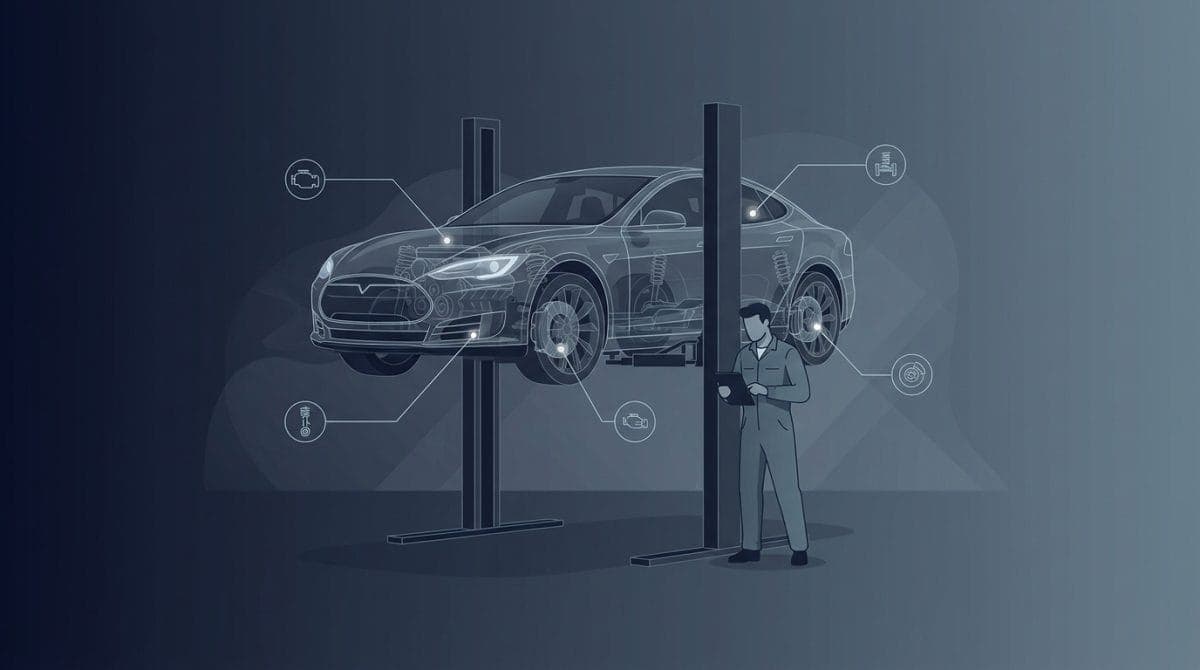
Even a careful buyer generally benefits from a second opinion. An independent technician — ideally one specializing in the vehicle’s brand — can perform a lift inspection, scan onboard diagnostics for stored and pending trouble codes, and evaluate items that are difficult to assess in a driveway. Typical professional PPI checks include:
- OBD-II scan for current, pending, and history codes
- Brake pad and rotor measurements
- Suspension and steering component play
- Exhaust and catalytic converter condition (a stolen or missing cat is an increasingly common issue)
- Compression or leak-down testing for higher-mileage engines
- Battery load test and charging system voltage
Most reputable sellers — including private owners and franchised dealers — will allow a PPI at an independent shop. A refusal to permit inspection is generally considered a red flag.
Step 7: Verifying Paperwork
- Title: Confirm the seller’s name matches the title and that there are no lien holders listed (or that any lien has been satisfied in writing).
- Odometer disclosure: Federal law generally requires odometer disclosure on the title for vehicles less than 20 model years old (with limited exceptions).
- Emissions and inspection stickers: Check state-specific requirements; some states will not register a vehicle with outstanding emissions issues.
- Warranty status: Powertrain and emissions warranties (including federal emissions warranty coverage on certain components) may still apply depending on age and mileage.
- Service records: Receipts or digital records from dealers or independent shops help establish a maintenance pattern.
Step 8: Red Flags That Typically Warrant Walking Away
- Seller refuses an independent inspection or will not share the VIN in advance
- Title is not in the seller’s name (“title jumping”)
- Salvage, rebuilt, flood, or lemon-law buyback brands that are not disclosed up front
- Multiple open NHTSA recalls that the seller is unwilling to have addressed
- Check engine light that has been recently cleared but returns during the test drive
- Evidence of odometer tampering, such as mismatched wear on pedals, steering wheel, and seat versus the displayed mileage
- Frame or structural rust, or welds that appear non-factory
Budgeting Beyond the Purchase Price
Used-car ownership costs extend well past the sticker. When building a budget, shoppers typically account for:
- State sales tax, registration, and title fees
- Insurance (quotes vary considerably by VIN — obtain one before purchase)
- Fuel costs based on EPA combined MPG and typical annual mileage
- Scheduled maintenance for the next 12 months (fluids, filters, tires, brakes)
- An emergency repair reserve — generally a few hundred dollars minimum for older vehicles
Putting It All Together: A Simple PPI Checklist
- Run the VIN through NHTSA recalls, complaints, and NCAP ratings.
- Review EPA fuel economy data for the model year.
- Pull a title-history report.
- Inspect the exterior, interior, and underbody in daylight.
- Check fluids and the engine bay cold.
- Perform a cold start and varied-route test drive.
- Take the car to an independent technician for a lift inspection and OBD-II scan.
- Verify title, odometer disclosure, and warranty status.
- Negotiate based on documented findings.
A disciplined process will not guarantee a trouble-free vehicle, but it typically stacks the odds in the buyer’s favor. The combined use of federal safety and fuel-economy data with a hands-on mechanical evaluation remains the most reliable approach available to U.S. used-car shoppers today.
About this guide
Researched with public federal data, cited inline above. Reviewed by the CarCabin editorial team. Updated when underlying data or methodology changes.
Written with AI assistance, reviewed by an editor. Reviewed by the CarCabin editorial team. Source citations and stats are linked inline above. We update guides when underlying federal data or methodology changes.
Disclaimer. Educational content. CarCabin is not a dealer, mechanic, or financial advisor. Always have a qualified mechanic inspect any vehicle before purchase, and verify recall status by VIN at nhtsa.gov/recalls.