
Trade In Vs Selling Private
Updated April 25, 2026
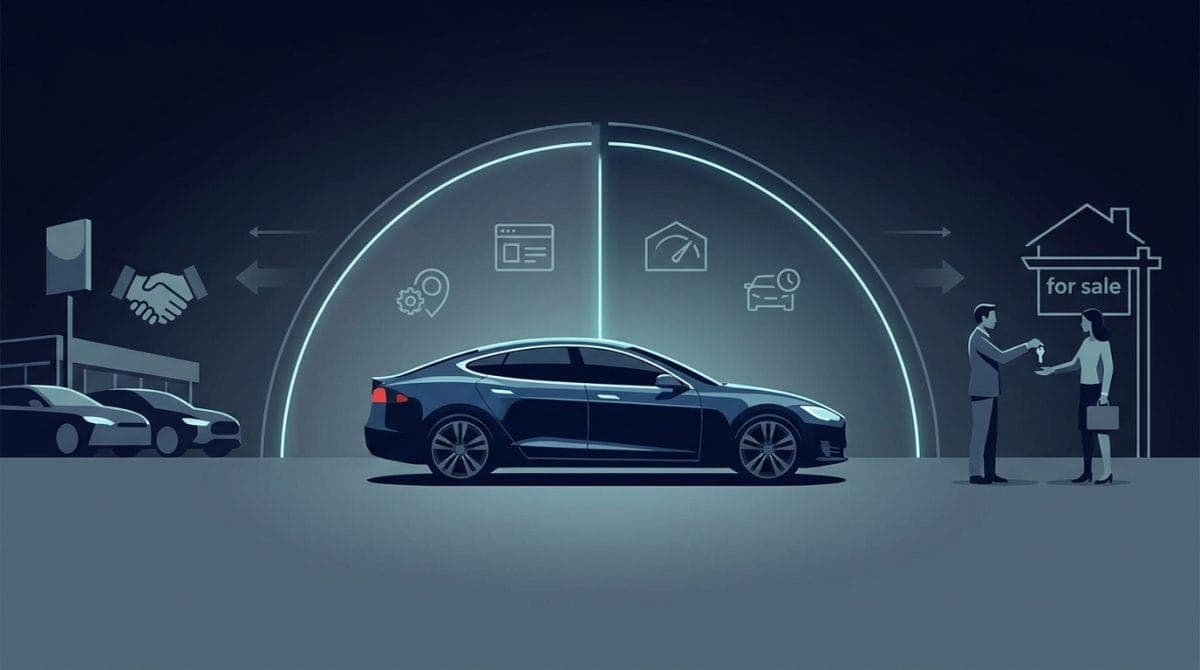
Trade-In vs. Selling Private: A Complete Guide for U.S. Car Owners
When the time comes to part ways with your current vehicle, one of the first and most consequential decisions you’ll face is how to sell it. The two most common paths are trading the car in at a dealership or selling it privately to another consumer. Each approach has distinct financial, logistical, and safety-related implications, and the right choice typically depends on your vehicle’s condition, its recall history, your local market, and how much time and effort you’re willing to invest.
This guide walks through the key considerations, including how federal resources from the National Highway Traffic Safety Administration (NHTSA) and the U.S. Environmental Protection Agency (EPA) can help you price, disclose, and document your vehicle accurately, whether you trade it in or list it yourself.
Understanding the Core Difference
A trade-in is a transaction between you and a franchised or independent dealer. The dealer appraises your car, offers a wholesale-leaning price, and typically applies that value toward your next vehicle purchase. A private-party sale, by contrast, is a direct transaction between two consumers, generally resulting in a higher sale price but requiring the seller to handle pricing, advertising, showing the vehicle, negotiating, and completing paperwork.
Neither option is universally better. The trade-in generally offers convenience and potential tax savings, while a private sale may generate more cash but requires more time and carries more personal responsibility for disclosures and title transfer.
Price: What the Data Generally Shows
Dealers typically offer trade-in values that are lower than private-party prices because they need room to recondition the vehicle, cover overhead, and resell it at a profit. Industry pricing guides often publish three tiers: trade-in, private-party, and retail. The private-party figure usually falls between the other two and reflects what a typical consumer-to-consumer transaction might yield.
Before choosing a path, it can be helpful to:
- Pull at least two independent value estimates (such as Kelley Blue Book, Edmunds, or NADA Guides).
- Search local listings for comparable year, trim, mileage, and condition.
- Request written trade-in appraisals from two or three dealers.
The spread between a trade-in offer and a realistic private-sale price varies widely. For common, high-demand vehicles in good condition, the gap can be significant. For older vehicles with higher mileage, cosmetic issues, or open recalls, the gap may narrow considerably.
The Sales-Tax Advantage of a Trade-In
Most U.S. states allow buyers to pay sales tax only on the difference between a new vehicle’s price and the trade-in credit. This can meaningfully reduce the effective cost of trading in. For example, if you’re buying a $30,000 vehicle and trading in a car valued at $10,000, many states would charge sales tax only on $20,000.
A handful of states do not offer this benefit, and rules change, so it’s worth checking with your state department of motor vehicles or department of revenue. When comparing a trade-in offer to a prospective private-sale price, include the tax savings in your calculation. In some cases, a trade-in that looks lower on paper can be competitive once sales-tax reduction is factored in.
Time, Effort, and Safety
A trade-in typically takes less than an hour of appraisal plus the time required to complete the paperwork for your next vehicle. A private sale can take days or weeks and generally includes:
- Cleaning and photographing the vehicle
- Writing and posting an accurate listing
- Responding to inquiries and screening buyers
- Hosting test drives
- Negotiating and accepting payment
- Completing a bill of sale, odometer disclosure, and title transfer
Private sales also carry personal-safety considerations. Meeting strangers, accepting payment, and accompanying buyers on test drives generally warrant common-sense precautions, such as meeting in public places, verifying funds before signing over the title, and bringing another person along.
Recalls, Complaints, and NHTSA Disclosures
Before listing or trading a vehicle, it’s generally wise to check its federal safety record. NHTSA maintains a free VIN-based recall lookup at nhtsa.gov/recalls that reports open safety recalls on most vehicles sold in the United States.
Why Recalls Matter for Sellers
Federal law generally prohibits franchised new-car dealers from selling new vehicles with open recalls, but the rules for used vehicles and private-party transactions are less restrictive. Even so, unresolved recalls can:
- Lower the appraisal value a dealer offers on a trade-in, particularly for major safety campaigns
- Cause private buyers to walk away or negotiate aggressively
- Create liability concerns if a known, unrepaired defect contributes to a future incident
Most manufacturer recall repairs are performed at no charge by franchised dealers, regardless of how many times the vehicle has changed hands. Completing open recalls before sale is typically inexpensive and may improve both the price and the speed of the transaction.
Reviewing Complaints and Investigations
NHTSA also publishes consumer complaints, manufacturer communications, and open defect investigations. Reviewing this data can help you answer buyer questions honestly. For example, if your model has a pattern of complaints regarding a specific component, buyers may ask about it, and being prepared with maintenance records or repair documentation tends to support a stronger asking price.
NCAP Crash-Test Information
NHTSA’s New Car Assessment Program (NCAP) publishes star ratings for frontal, side, and rollover crash performance. While NCAP ratings are determined when the vehicle is new, they remain a useful reference point in private-party listings, particularly for families comparing used vehicles. Citing an official NCAP rating in your listing can be more credible than vague safety claims.
Fuel Economy and EPA Data
Fuel economy is frequently one of the first questions a private buyer asks. The EPA publishes official city, highway, and combined MPG estimates for most light-duty vehicles at fueleconomy.gov, including older model years. Referencing EPA numbers rather than estimated or personal averages generally lends more credibility to a listing and reduces disputes.
For hybrid, plug-in hybrid, and electric vehicles, EPA ratings include MPGe, electric-only range, and combined range figures. Including these numbers — along with any documented battery-health reports — can support a stronger private-sale price, particularly as buyers become more attentive to efficiency and operating costs.
When a Trade-In Typically Makes More Sense
A trade-in may be the more practical choice when:
- You’re buying another vehicle at the same dealer. The sales-tax credit, streamlined paperwork, and ability to roll negative equity (if any) into the new loan can simplify the transaction.
- Your vehicle has significant mechanical or cosmetic issues. Dealers can absorb reconditioning costs and wholesale the vehicle if necessary; private buyers often can’t.
- The car has open recalls, a salvage or rebuilt title, or a complicated history. These factors may deter private buyers.
- You owe more than the car is worth. Dealers can sometimes structure financing to handle negative equity, though this generally increases the total cost of the new loan.
- You need the transaction completed quickly. Most trade-in appraisals and paperwork can be finalized the same day.
- Your local private-party market is weak for your vehicle’s make, model, or segment.
When a Private Sale Typically Makes More Sense
A private sale often yields a better financial outcome when:
- Your vehicle is in strong demand. Popular trims, well-maintained examples, and vehicles with desirable options generally fetch more from private buyers.
- You have complete service records and can document the vehicle’s history.
- There are no open recalls or all recalls have been completed.
- You have time to photograph, list, negotiate, and complete the transfer.
- You’re comfortable with the paperwork required in your state.
- The trade-in offer is substantially lower than private-party comparables, even after accounting for sales-tax savings.
Running the Numbers: A Worked Example
Consider a hypothetical vehicle with these estimates:
| Metric | Estimated Value |
|---|---|
| Dealer trade-in offer | $12,000 |
| Realistic private-party sale price | $14,500 |
| Replacement vehicle price | $30,000 |
| State sales tax rate | 7% |
Trading in reduces taxable value by $12,000, saving $840 in sales tax. The effective trade-in value becomes roughly $12,840. The private-sale advantage in this example is about $1,660 before accounting for advertising fees, time spent, and any repairs to make the car market-ready. Whether that difference justifies the additional effort is a personal decision.
Paperwork Checklist for a Private Sale
Requirements vary by state, but most private-party transactions generally involve:
- Title: Signed over to the buyer, with lienholder release if applicable
- Bill of sale: Often required and typically lists VIN, date, price, and both parties’ information
- Odometer disclosure: Required by federal law for most vehicles under 20 years old, typically on the title or a separate form
- Release of liability: Filed with the state DMV to end your responsibility for the vehicle
- Emissions or safety inspection: Required in some states before transfer
- Recall status documentation: Not always required, but a printed NHTSA VIN lookup can support your disclosure
Paperwork for a Trade-In
Trade-in paperwork is typically handled by the dealer’s finance and title office and generally includes:
- Title sign-over (with lien payoff handled by the dealer)
- Odometer disclosure
- Trade-in appraisal acknowledgment
- Payoff authorization if you still owe money on the vehicle
Verify that your old loan is paid off promptly after the trade and that your name is released from the title. It’s generally reasonable to follow up with the lender within a few weeks.
Protecting Yourself During a Private Sale
- Verify payment before releasing the title. Cashier’s checks can be forged; confirming funds at the issuing bank is generally safer than trusting the document alone.
- Meet in public. Many police stations offer designated safe exchange zones.
- Bring a companion for test drives when possible, and verify the buyer’s driver’s license.
- Use written disclosures. Note known defects, accident history, and recall status in the bill of sale. “As-is” language may limit post-sale disputes in many states but does not override fraud claims.
- File the release of liability with your state DMV promptly.
Instant Cash Offers: A Middle Path
Online car-buying services — operated by national retailers and some dealer networks — typically offer an instant cash quote based on a VIN, mileage, condition report, and photos. These offers generally fall between traditional trade-in and private-party values. They can be a reasonable compromise for sellers who want to avoid private-sale hassle but think a traditional dealer trade-in is too low.
When comparing instant offers, confirm:
- How long the offer is valid (typically a few days)
- Whether an in-person inspection could adjust the price
- How and when payment is delivered
- Whether the service handles the title and loan payoff
Preparing the Vehicle for Either Path
Both trade-in and private-sale values generally benefit from basic preparation:
- Complete open recalls through a franchised dealer at no cost
- Address minor maintenance items (wiper blades, bulbs, fluids)
- Clean and detail the interior and exterior
- Gather service records and the owner’s manual
- Remove personal belongings and unpair phones from the infotainment system
- Note the EPA fuel economy rating for your listing
Expensive cosmetic repairs typically don’t return their full cost at trade-in and generally yield mixed results even in private sales. Cleaning and mechanical attention usually offer the best return.
Final Considerations
There’s rarely a single “correct” answer to trade-in versus private sale. The stronger the private-party market for your specific vehicle, the more a private sale tends to pay off. The more complicated your situation — negative equity, open recalls, mechanical issues, or time pressure — the more attractive a trade-in or instant cash offer generally becomes.
Taking 30 minutes to run a VIN through NHTSA’s recall tool, pull an EPA fuel-economy figure, and gather two or three independent value estimates typically produces a clearer picture than any single dealer appraisal or online quote. From there, you can weigh convenience, cash, and effort against your personal priorities.
About this guide
Researched with public federal data, cited inline above. Reviewed by the CarCabin editorial team. Updated when underlying data or methodology changes.
Written with AI assistance, reviewed by an editor. Reviewed by the CarCabin editorial team. Source citations and stats are linked inline above. We update guides when underlying federal data or methodology changes.
Disclaimer. Educational content. CarCabin is not a dealer, mechanic, or financial advisor. Always have a qualified mechanic inspect any vehicle before purchase, and verify recall status by VIN at nhtsa.gov/recalls.